Recovery has a reputation problem. It's been over-mystified — the 30-minute anabolic window, the creatine timing rituals — or quietly dismissed as something only serious athletes need to think about. The real picture is more useful than either extreme.
Your Muscles Aren't Recovering. They're Rebuilding.
After a hard session, muscle fibers experience microscopic damage — and that's not a problem, that's the mechanism. Your body responds by laying down new tissue, stronger than what was there before. But rebuilding requires raw materials: amino acids, delivered to muscle where repair is actively underway.
This is where the post-workout window actually earns its name. Not because there's a closing door after 30 minutes, but because the body stays in a heightened state of protein synthesis for several hours after training. The tissue is primed and the demand is real, which means what you eat in that stretch genuinely moves the needle.
The Protein Math (Without the Obsession)
You don't need to stress exact timing, but you do need enough protein distributed reasonably across the day — with something substantial in the hours around training. Research consistently points to 20–40g of high-quality protein as an effective post-workout dose, and "high-quality" has a specific meaning here.
It comes down to amino acid completeness, particularly BCAAs — leucine, isoleucine, and valine — which are the primary drivers of muscle protein synthesis. Leucine acts almost like a trigger: without enough of it, the recovery signal is weaker than it should be, regardless of how much total protein you're consuming.
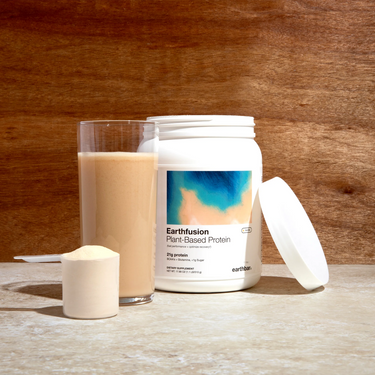
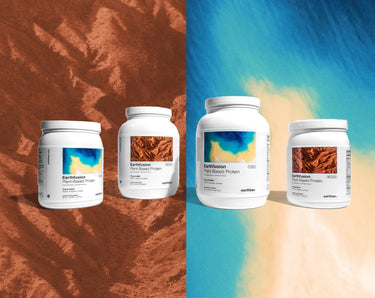
This is also why not all plant proteins are created equal. Many are incomplete on their own, which is why Earthfusion™ is formulated the way it is — French yellow pea protein as the base, with a full BCAA profile built in to make it a complete protein source. L-Glutamine supports tissue repair and helps reduce the kind of deep soreness that follows genuinely hard training. And digestive enzymes ensure the protein you're consuming is actually being absorbed and used, rather than just passing through. It's designed specifically for post-workout recovery, not just as a general protein top-up.
Recovery Is a Full-System Process
Muscle repair is the obvious part of the story, but it doesn't happen in isolation. Sleep quality, hydration, nervous system downregulation — all of it feeds into how well the body actually adapts to the work you're putting in.
Inflammation gets misread constantly, too. Acute inflammation after exercise is part of the adaptive signal — it's how the body knows something happened and responds accordingly. The problem is chronic inflammation, the kind that builds when training load consistently outpaces recovery.
That's when performance plateaus, when injury risk creeps up, when the hard work stops paying off the way it should. The goal isn't to eliminate stress on the body. It's to give the body what it needs to respond to that stress well.
Keep It Simple
Eat something real within a couple of hours of training. Don't skip the carbs — glycogen replenishment is part of recovery, not a workaround. Hydrate with intention, especially if the session was long or the sweat was heavy. And treat sleep as non-negotiable, because that's genuinely where the bulk of muscle protein synthesis happens. No supplement fills the gap that poor sleep creates.
Recovery doesn't have to be complicated. It just has to be consistent.